
Infrastructure
Pharmaceutical Development & Analytical Science
- Development and analytical laboratories
- 5
- Development and analytical laboratories
- Process and analytical instruments
- 35+V-24
- Process and analytical instruments
- Stability and photostability chambers
- ICH
- Stability and photostability chambers
 01 Oral solid process
 02 Sterile development
 03 Analytical
01
Oral solid process lab
Granulation, pelletisation, compression and coating at bench and pilot scale.
Nine process routes can be tried on the same molecule and taken to pilot scale here, so the route is chosen on evidence rather than on what the laboratory happens to own.
- Fluid bed processor (FBP) with top-spray and Wurster columns, ACG
- Fluid bed dryer
- Rotary compression: Cadmach 17-station and Karnavati 10-station, D and B tooling
- Roll compactor
- Extruder and spheroniser, Fuji Paudal
- Air-jet mill; multi mill, Becto Chem
- Octagonal blender (3 L, 7 L); double-cone blender (3 L, 5 L)
- Auto-coating machine, Neocota; conventional coating pan
- Encapsulation machine, MF 300
- High-pressure homogeniser, GEA Niro Soavi Panda Plus; lab-scale homogeniser
- Vibratory sifter, Becto Chem; sieve shaker, Electrolab
- Blister pack machine; induction cap sealing machine
- Moisture analyser, Mettler Toledo; tap density, disintegration and hardness testers
02
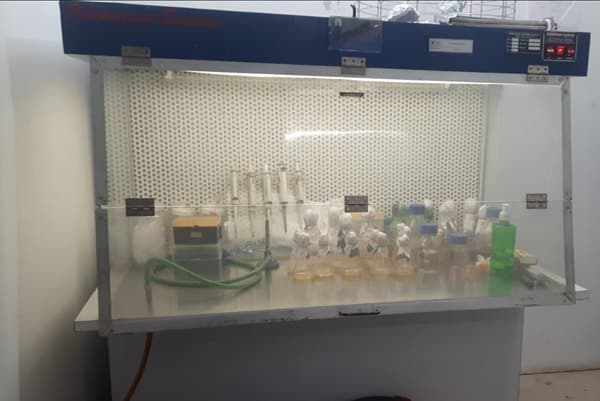
Sterile development lab
Injectables, emulsions and suspensions under controlled conditions.
Sterile formats from simple aqueous injections to nano-emulsions and lyophilised products are developed here, which is why complex parenterals do not have to be sent elsewhere mid-programme.
- Manufacturing tanks, SS 316L (5–10 L)
- High-pressure and high-speed homogenisers
- Filtration tank and peristaltic pump
- Autoclave
- Laminar airflow unit
- Sealer and de-sealer
- Top-mounted stirrer; magnetic stirrer with heating
- Microscope, up to 100× magnification
- pH meter
03
Ointment / topical semisolid development lab
A dedicated Topical Semisolid Development Laboratory for the development and optimization of ointments, creams, gels, lotions and other dermatological formulations.
The facility supports pre-formulation, API–excipient compatibility, vehicle and base selection, formulation screening, homogenization, emulsification and process optimization. Development activities include optimization of critical formulation and process parameters, rheological and physical characterization, drug-content uniformity, in-vitro release testing (IVRT), stability studies and scale-up support. The laboratory is designed to support development of both conventional and complex topical formulations for generic and differentiated products.
- Vehicle and base selection
- Homogenization and emulsification
- Rheological characterization
- In-vitro release testing (IVRT)
04
Liquid oral development lab
A dedicated Oral Liquid Development Laboratory for formulation and process development of oral solutions, suspensions, emulsions, syrups and other liquid oral dosage forms.
The facility supports pre-formulation, solubility and compatibility studies, vehicle and excipient selection, pH and viscosity optimization, taste-masking, preservative-system development and formulation screening. It enables optimization of critical formulation and process parameters, including mixing, homogenization, suspension characteristics and physical stability. The laboratory also supports analytical evaluation, dissolution/release assessment where applicable, stability studies and scale-up for clinical, BE and commercial batches.
- Solubility and compatibility studies
- pH and viscosity optimization
- Taste-masking
- Preservative-system development
05
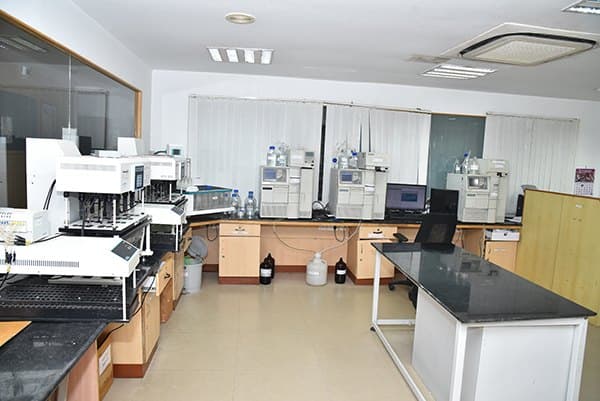
Analytical laboratory
Separation, mass spectrometry, elemental analysis and stability.
Impurities, residual solvents and elemental impurities are identified in the same building as the batch that produced them, so an analytical finding reaches the formulator the same week.
- Liquid chromatography–tandem mass spectrometry (LC-MS/MS)
- Gas chromatography–mass spectrometry (GC-MS)
- Inductively coupled plasma mass spectrometry (ICP-MS)
- Shimadzu HPLC with UV
- Dionex ion chromatography
- Dissolution apparatus, USP I, II and III (Electrolab), with autosampler
- Franz diffusion apparatus
- Temperature/humidity-controlled stability chambers and photostability chambers
- UV and UV-visible spectrophotometers
- Particle-size analyser, micron to nano
- Karl Fischer titrator, viscometer, conductivity meter
- Centrifuge, automatic shaker, sonicator
Science & technology
The science behind difficult-to-make products.
Reformulations that solve a patient or supply problem.
Oral liquids made from tablets for children, ready-to-use injectables made from lyophilised powders, extended-release and orally disintegrating tablets, all designed on non-infringing routes.
- Tablet → oral solution or suspension
- Powder → ready-to-use injection
- Immediate → extended release
- Differentiated topicals
Solifenacin succinate, tablets reformulated as an oral suspension and solution for paediatric patients: 6-month stability completed.
From the laboratories
Fluid bed processor 
Rotary compression 
Coating 
Granulation 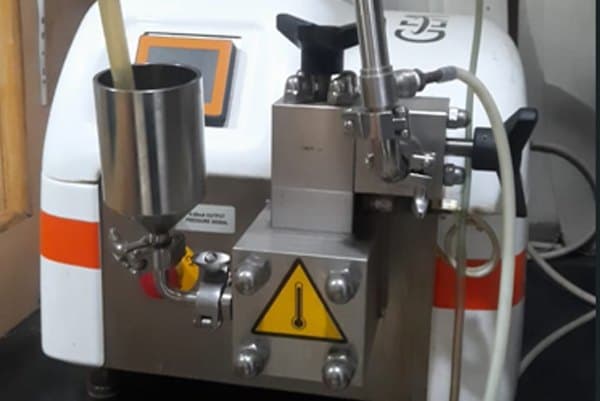
Homogenisation Laminar airflow Analytical suite 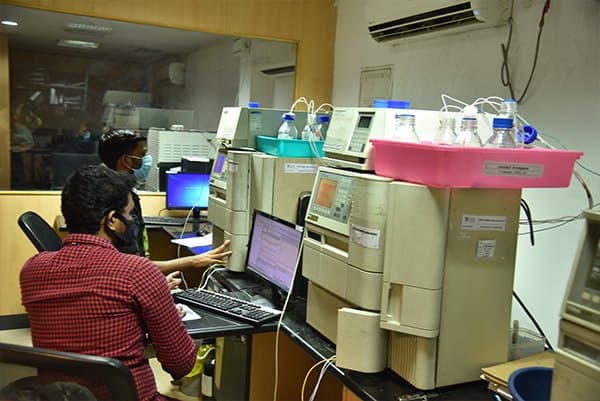
Chromatography 
Extrusion–spheronisation
Equipment list and capacities to be confirmed against the current asset register.V-24
Ways to partner
Five ways to engage, one team behind each.
01
Dossier development
We develop the product and the dossier; you file it.
02
Dossier compilation
We turn development data you already hold into a submission-ready dossier.
03
Co-development
We share the development investment and the commercial return through profit sharing.
04
Technology transfer
We move a developed product into your plant or your chosen CMO.
05
Commercial supply
We supply finished product through a qualified manufacturing network.


Start a conversation
Where does your programme stand?
Tell us the molecule, the dosage form and the market you are filing in. A programme lead will read it and reply with what we would do next.
Business enquiries: vasanthi@kmshc.com · +91 97898 75194V-23